Welcome to our new format for the Powell County Patriot. We hope this format will be enjoyable for you.
This is the first of a several part series on earthquakes. As you may or may not know we just had a Magnitude 3.1 earthquake just 4 miles from Paint Lick, KY on December 28, at 12:47 PM. So wonder why that happened? Or how did that happen? Over the next few segments I will try my best to give you answers to the questions you have.
Long before people understood plate tectonics and the structure of Earth, they experienced earthquakes. They tried to explain what caused them. The different cultures had many different explanations for why the Earth shook, ranging from giant animal myths to underground wind storms, rain storms, or explosions.
Today scientists accept the relationship between the giant moving crustal plates as the primary cause of earthquakes. Plate tectonics helped to solve earthquake and volcanic mysteries. However, they remain as frightening to present-day people as they were to people in the past, and just as deadly. Since 2005 the earth has experienced over 300,000 quakes, about 1500 major destructive and deadly ones, about 18,000 middle of the road earthquakes, 4.0 to 6.0. All of these quakes resulted in over half a million deaths.
So Mr. Wizard, what causes the earthquakes?
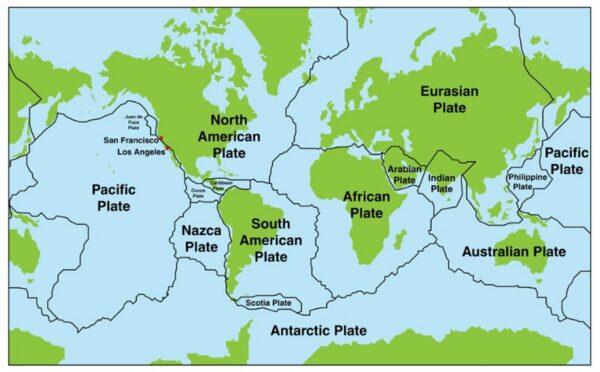
Well, it is complicated but here we go. Earthquakes happen because the outer layer of the Earth’s surface (the crust) is not as solid as we might think. Instead, it’s broken into giant “puzzle shaped pieces” called tectonic plates. These plates are always moving (very slowly) because the hot, soft rock deep down under them is constantly shifting. The picture to the right is a very simple example of some of the biggest plates our planet’s crust is broken into.
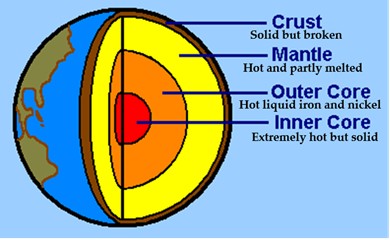
To help explain it just a little more let’s look at the “inside” of the Earth. You have the basic layers from inside out: inner core, outer core, mantle and crust. Our crust sits on top of the Mantle which allows the plates to move around like a crust of rock on a lava flow. As currents from underneath the crust moves it pushes the plates around, grinding them into each other.
Okay, that is it for part one of this series, I don’t want to get too complicated this is where I will leave off. If you are interested you can find all kinds of information on the following sites.
https://spaceplace.nasa.gov/earthquakes/en/
https://www.usgs.gov/faqs/what-earthquake-and-what-causes-them-happen
https://scienceexchange.caltech.edu/topics/earthquakes/what-causes-earthquakes
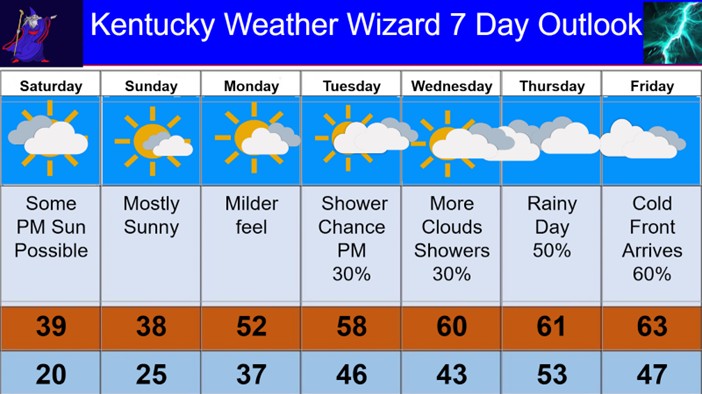
Saturday: Some fog will be around otherwise Cloudy and cold for the most part, some sun may be seen late in the afternoon. High around 39.
Saturday Night: Believe it or not Mostly clear, with a low around 20.
Sunday: We have the best chance for sunny skies we have seen in quite a while but it will be cold. High 38. With a slight North breeze.
Sunday Night: Clouds roll back to partly cover the moon, low around 25.
Monday: Partly to mostly Sunny, with a high near 52.
Monday Night: Some clouds possible with a low around 37.
Tuesday: Partly sunny and milder, with a high near 58.
Tuesday Night: Cloudy with a 30% chance of showers. Low 46.
About the Author