New open-access resources give Harlan County, Martin County, and other
communities in Kentucky the knowledge to understand, protect, and act on
their water systems at a time when it has never mattered more.
WINCHESTER, KY, May 12, 2025 — Livelihoods Knowledge Exchange Network
(LiKEN), a Kentucky-based nonprofit, has announced the launch of three free,
online toolkits designed to help communities build local knowledge,
strengthen collaboration, and create more resilient water futures: the
Community Engagement Guide, the Harlan County Water Resilience
Toolkit, and the Martin County Water Resilience Toolkit. All three are freely
available now at LiKENKnowledge.org, with individual pages downloadable
for sharing and offline use.
Why This Matters and Why Now
Across Central Appalachia, communities are confronting a convergence of
crises. Aging and under–funded water and wastewater infrastructure is
buckling under the pressure of frequent and severe floods, droughts, and
extreme weather events. With federal and state funding for rural and
underserved communities shrinking, this makes it harder than ever for
residents to get straight answers, access reliable resources, or even have a
meaningful voice in decisions that shape their water systems.
The stakes could not be higher. As LiKEN has witnessed through years of
community–engaged work in Harlan and Martin Counties, knowledge is
power, and that power is needed urgently right now. Communities that
understand how their water systems work, what to do in an emergency, who
to call, and how to organize are communities that can protect themselves,
advocate effectively, and shape better outcomes. These toolkits exist to make
that possible.
Three Tools, One Mission
Community Engagement Guide: For communities facing water problems, or
for anyone who wants to take action but does not know where to start. Our
guide offers practical tools for organizing meetings, building brave spaces,
centering local voices, and mobilizing for lasting change. An extensive
glossary ensures it is accessible to residents of all backgrounds.
Harlan County Water Resilience Toolkit: Tailored to Harlan County’s unique
landscape of multiple community water systems, this toolkit was developed
through five years of community-engaged work, including listening sessions
with water operators, system managers, city council members, water board
members, and community residents. We explain where water comes from,
what can go wrong, what to do in emergencies, who to contact, and how to
engage at the community, state, and federal levels.
Martin County Water Resilience Toolkit: Grounded in five years of
community–engaged work, this toolkit covers how Martin County’s water and
wastewater systems work, what discolored water can mean, emergency
steps, local system contacts, certified labs for water testing, and fact sheets
for each zone of the water system. Above all, this is built on a conviction:
Martin County’s water story is not defined by the stigma of “bad water.” That
is not the community’s narrative anymore.
From the Community, For the Community
All three toolkits are created through LiKEN’s Water Collaboratory program
and the collaborative research project “Water and Climate Equity” (WCE),
developed in partnership with the Pacific Institute and the Rural Community
Assistance Partnership (RCAP). The content was shaped between 2022 and
2026 through iterative knowledge exchange across residents, technical
experts, water system operators, government officials, and local leaders, with
special attention given to those most exposed to water risks.
Already, early feedback from Harlan County residents has shaped real–time
improvements, and there is strong interest from other Appalachian
communities seeking similar resources for their own water stories. LiKEN
plans to expand this work with a how-to-guide for communities wanting to
develop their own locally tailored water resilience toolkit.
Get Involved
All three toolkits are free, openly available, and easy to share. Whether you
are a resident, a community leader, a water board member, or a
decision-maker, these resources are for you. Visit LiKENKnowledge.org to
explore all three toolkits, download individual pages, and share them widely.
Each toolkit includes a feedback form because your voice helped shape
these tools, and LiKEN wants your help to keep improving them.
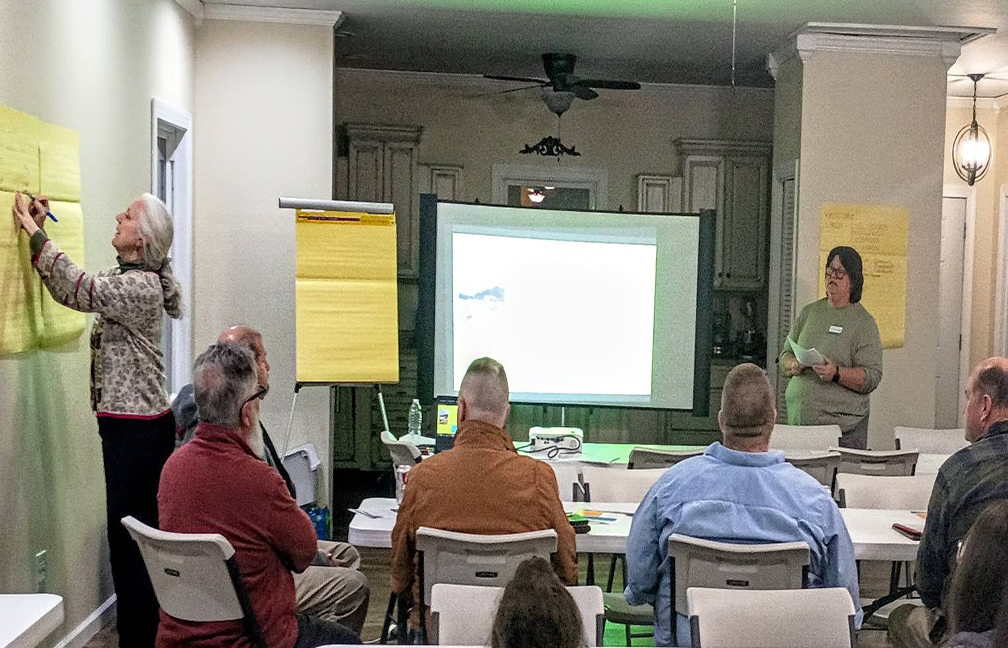
(PHOTO) LiKEN’s Harlan County community engagement coordinators and staff
work alongside residents in Harlan and Martin counties to build water knowledge
and local resilience. The launch of these three toolkits marks the culmination of over
three years of community-engaged work across Eastern Kentucky. (Photo: Jennifer
McDaniels)
About the Author







![btb 2026[66]](https://powellcopatriot.com/wp-content/uploads/2026/08/BTB-202666-768x683.jpg "Greater Clark Foundation Launches Second Round of Building Trust & Belonging Program with $175,000 for Community-Led Ideas")